When people talk about bleaching hair, the conversation often starts with one question: how strong is the developer?
It is easy to assume that a higher percentage will always make hair lighter, faster and better. But faster processing does not automatically produce a cleaner blonde, a more even result or hair that remains manageable afterwards. The final outcome depends on much more than developer strength alone.
At Oilly Hair Salon, our bleaching, highlights and balayage work is built around a 3% developer approach. We choose gradual, controlled lightening because our priority is not simply how quickly the hair changes colour. We also need to consider how the hair responds during the process and what condition it will be in when the service is finished.
This does not mean that bleaching is damage-free. Any process that removes natural or artificial pigment changes the hair. Our aim is to avoid unnecessary additional damage by combining a carefully selected lightener with detailed sectioning, controlled application, regular observation and a realistic target for each client.
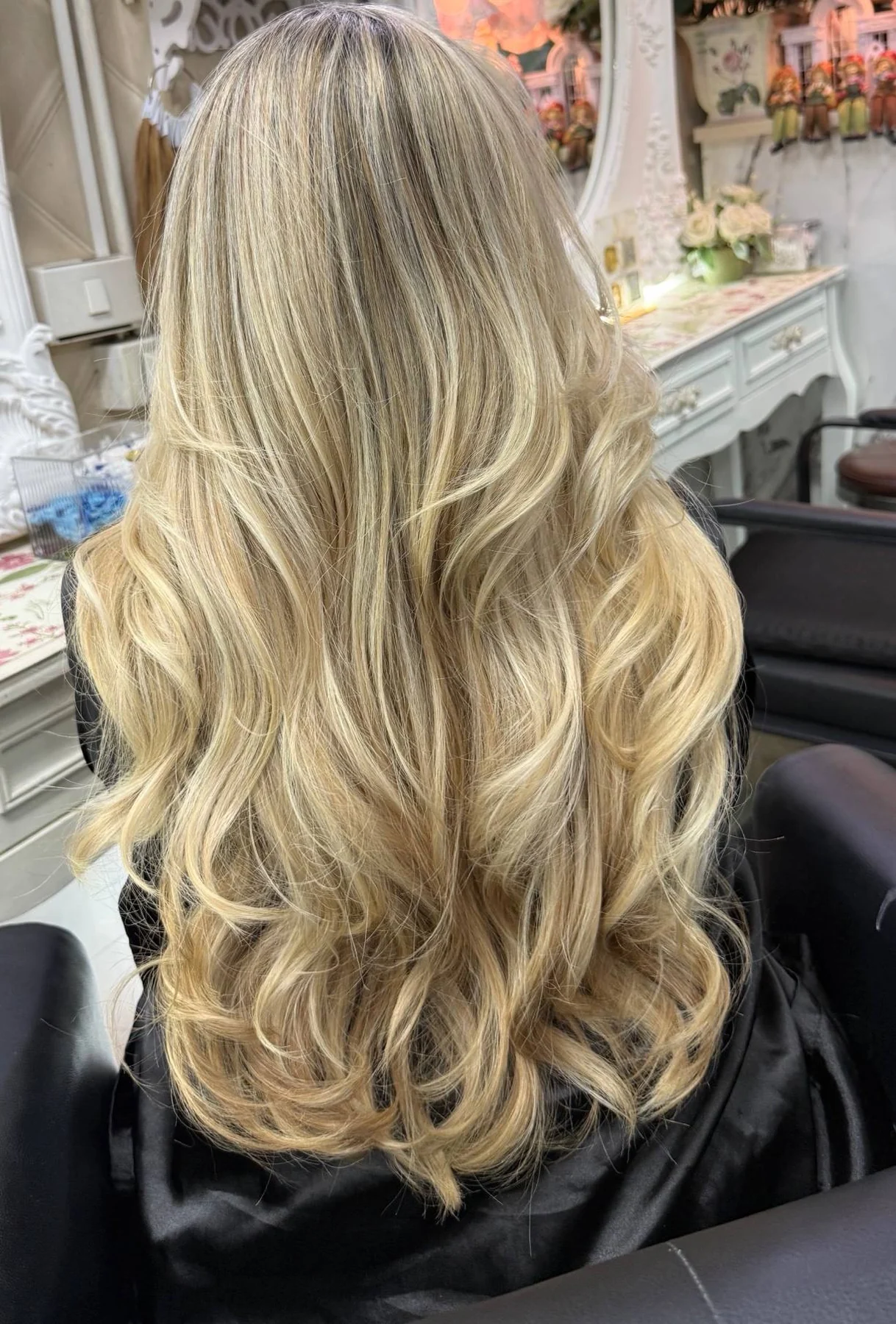
Stronger Developer Does Not Always Mean a Better Blonde
A stronger developer can make the lightening reaction move faster. That speed may be useful in some settings, but it does not guarantee that the result will be brighter, more even or more beautiful for every head of hair.
Hair does not become suitable for more processing simply because it has not yet reached the desired colour. If the structure begins to lose too much strength before the target level is reached, continuing to push the hair can create dryness, excessive swelling, loss of elasticity and breakage.
This is why Oilly does not use developer strength as a shortcut. We prefer to create the lightening plan around the hair in front of us: its natural depth, previous colour, porosity, elasticity, density and chemical history.
The question is not only, “How light can we make it?”
The more important question is, “How light can we take it while keeping the result suitable for daily care, styling and future salon services?”
The Bleaching Product Is Only One Part of the Result
Not all lightening products behave in exactly the same way. They can differ in texture, stability, lifting behaviour, application control and the way they perform in different techniques.
A product that works well for a fine highlight may not be the best choice for every full-head correction. A formula that is easy to control on untreated hair may react differently on porous ends or hair with several layers of previous colour.
Product selection matters, but professional judgment matters just as much. Even a premium lightener cannot compensate for unsuitable sectioning, uneven saturation, uncontrolled heat or processing beyond what the hair can tolerate.
At Oilly, choosing a lightener is part of a complete service design. We consider the starting condition, the target, the placement technique and how every section of hair responds as the service progresses.
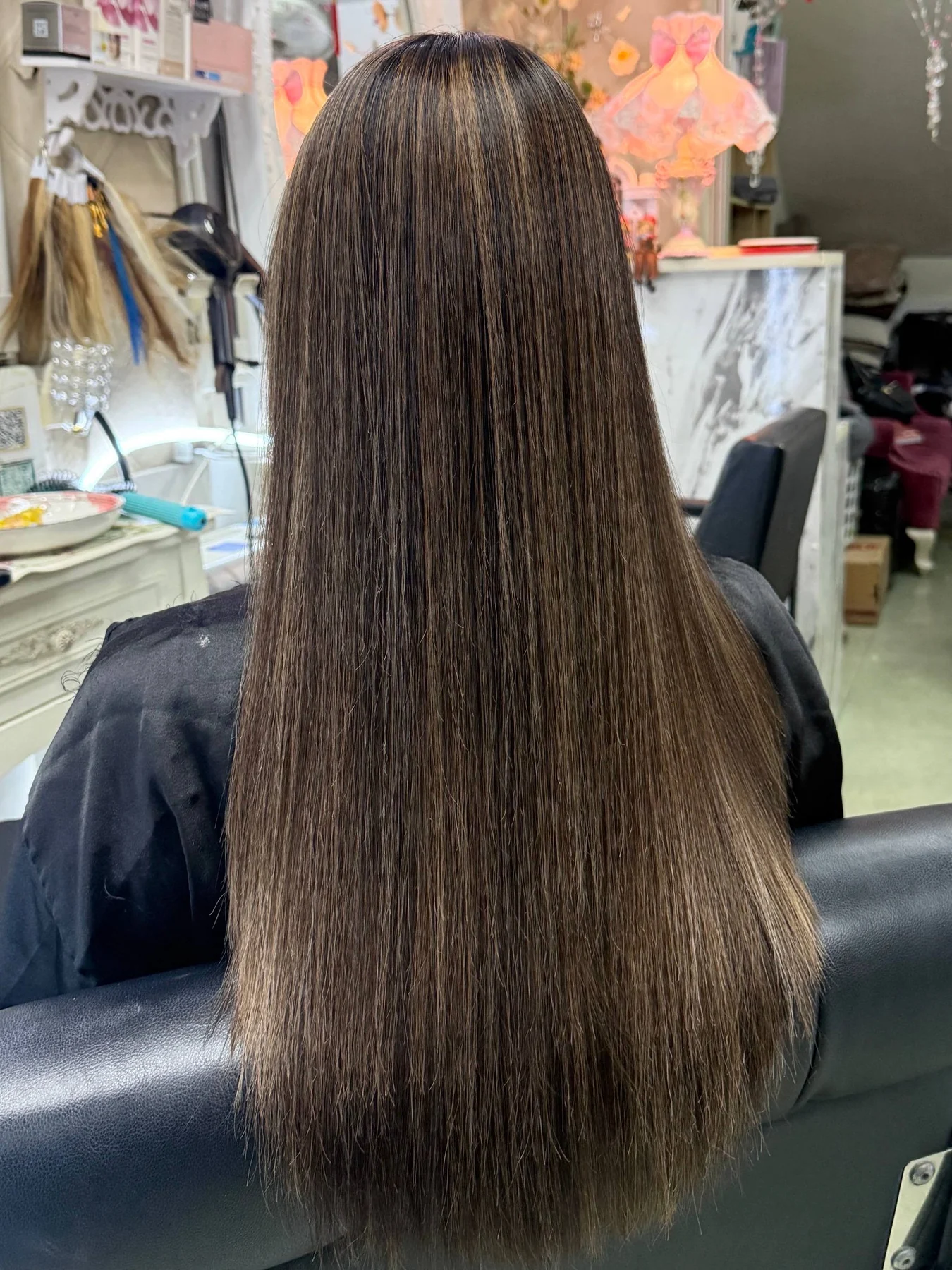
Why We Choose a Low-and-Slow 3% Approach
Using 3% developer gives our stylists a more gradual working process. Rather than forcing the hair to change as quickly as possible, we focus on controlled saturation and careful observation.
This approach requires patience. It also requires experience: the sections must be clean, the product must be distributed consistently, and the stylist must know when a section is developing well, when it needs more time and when it should be stopped.
For suitable hair, 3% developer can still create significant lift. Depending on the natural base, previous colour history and current condition, some clients may reach approximately Level 8–9 in one controlled lightening session. This is possible even on some European hair types, but it is not a fixed promise for every client.
Previously darkened hair, repeatedly bleached hair or sections that are already fragile may require a different target or a phased plan. Sometimes the most professional decision is not to take the hair lighter that day.
Consultation and Strand Testing Come Before the Promise
Clients often visit us after being told that their hair is too dry, too damaged or unable to tolerate another bleaching service. In these situations, we do not make a decision from a photograph or a colour goal alone.
We look at the hair directly. When needed, we perform a strand test to see how a small section responds before planning the full service.
During the assessment, we consider:
- previous bleaching and colour history;
- dark or black artificial pigment;
- straightening, perming or other chemical services;
- dryness, porosity and breakage around the ends;
- elasticity and strength when the hair is wet;
- the distance between the current base and the desired colour;
- whether the result is realistic in one appointment or should be divided into stages.
A strand test is not only a test of how light the hair can become. It also helps us judge how the hair behaves during processing and how it feels afterwards.
If the response is not suitable, we may recommend changing the colour goal, working in stages or pausing further bleaching. Bond support and careful technique can help, but they do not make every compromised head of hair safe to bleach.
Why Oilly Uses Breathable Plastic Foam Sheets in Selected Services
In selected highlights and balayage techniques, Oilly uses breathable plastic foam sheets to separate and support the lightened sections.
Traditional foil is a useful professional tool, but it can retain heat and accelerate the reaction depending on the product, wrapping method and salon environment. For work where we want a slower and more observable process, breathable foam sheets give us another way to manage separation and heat.
This does not mean that foam automatically protects the hair or that foil always causes damage. The material is only one part of the system. The result still depends on section size, product quantity, saturation, placement, temperature, timing and the stylist’s decisions throughout the service.
Our purpose is control. We choose the working material that supports the technique and the condition of the client’s hair rather than using the same method for every person.
Clients may notice that a detailed foam-sheet service feels heavier on the head because many sections are carefully separated. That extra setup is part of a precise application designed to keep the pattern clean and allow the stylist to monitor the process closely.
What Olaplex and Epres Can—and Cannot—Do
Depending on the service plan, Oilly may incorporate Olaplex or Epres as bond-support products during the lightening process.
These products can support the internal bonds of the hair while chemical work is taking place. They are valuable tools, particularly when the service involves substantial lightening or hair with a more complicated history.
However, bond support is not permission to ignore the condition of the hair. It cannot make every bleaching plan suitable, eliminate all chemical change or return severely compromised hair to untouched virgin condition.
The foundation still has to be correct: realistic colour planning, an appropriate product choice, controlled application and the willingness to stop when the hair has reached its safe working limit.
We Assess the Hair Wet and Dry
A finished colour is not the only result we examine.
After lightening and care, we also assess how the hair behaves both wet and dry. Wet hair can reveal changes in elasticity, stretch response and water absorption. Dry hair shows us the surface feel, manageability, end condition and how the result moves when styled.
We encourage clients to feel the hair for themselves. The goal is not to hide the condition beneath a polished finish, but to let the client understand how the hair actually feels after the service.
No responsible salon can promise that bleached hair will remain identical to untreated hair. What we can do is choose a careful process, monitor the condition throughout the appointment and protect as much strength and manageability as the starting condition allows.
Quality Before Speed
Oilly’s 3% developer approach is not about claiming that one percentage is a magic answer for everyone. It reflects how we prefer to work: gradually, carefully and with the condition of the hair included in every technical decision.
A stronger developer may shorten processing time. Our priority is different. We want to create clean, bright and dimensional lightening without pushing the hair harder than necessary simply to finish faster.
That principle applies whether we are creating fine highlights, a balayage pattern or a broader blonde transformation. The design may change, but the decision process remains the same: assess first, test when needed, control the reaction and place hair quality ahead of speed.
Not Sure Whether Your Hair Can Be Bleached Again?
If your hair feels dry, has been bleached several times or has been described as too fragile for further lightening, you are welcome to visit Oilly Hair Salon for a consultation.
Bring your current hair condition and your colour goal. We can examine the hair, review its chemical history and perform a strand test when appropriate. From there, we can explain whether the goal may be suitable in one session, whether it should be approached gradually, or whether the safest decision is to postpone further bleaching.
The consultation is not a promise that every head of hair can be bleached. It is the first step toward designing a result that respects both the colour you want and the hair you need to live with afterwards.
Frequently Asked Questions
Does 3% developer cause no damage?
No bleaching process is completely damage-free. Oilly uses 3% developer as part of a gradual, controlled approach intended to reduce unnecessary additional damage. The result still depends on the starting condition, previous chemical history, product choice, application and processing control.
Can 3% developer lift hair to Level 8–9?
It can in suitable hair. Natural base, strand thickness, artificial pigment and previous chemical services all affect the achievable lift. Some clients may reach Level 8–9 in one controlled session, while others may require a staged plan or a different target.
Can badly damaged hair still be bleached?
Not always. We need to assess the hair directly and may perform a strand test. If the hair does not respond safely, we may recommend postponing bleaching, adjusting the goal or working gradually rather than forcing the service.
Are plastic foam sheets always better than foil?
No single material is best for every technique. Oilly uses breathable plastic foam sheets in selected services to support separation, heat management and observation. Foil remains a valid professional tool when it suits the hair and the intended technique.
Do Olaplex or Epres make bleaching damage-free?
No. They provide bond support during chemical services, but they cannot remove every risk, permanently restore severely damaged hair or make an unsuitable bleaching plan safe. They work best as part of a carefully controlled service.
Should I have a strand test before bleaching?
A strand test is especially useful when the hair has been dyed dark, bleached repeatedly, chemically straightened, permed or shows signs of fragility. It helps the stylist evaluate both the achievable lift and the condition of the hair after processing.