Hair Repair After Bleach, Straightening and Grey Coverage in Bangkok
Hair that has been permanently straightened and repeatedly coloured to cover grey is often dry, fragile and uneven in tone. This case shows how Oilly approached one such head of hair in Sathorn: a careful assessment first, then a gradual colour plan with treatment and Olaplex, and a tone chosen to protect the hair rather than chase the brightest possible blonde.
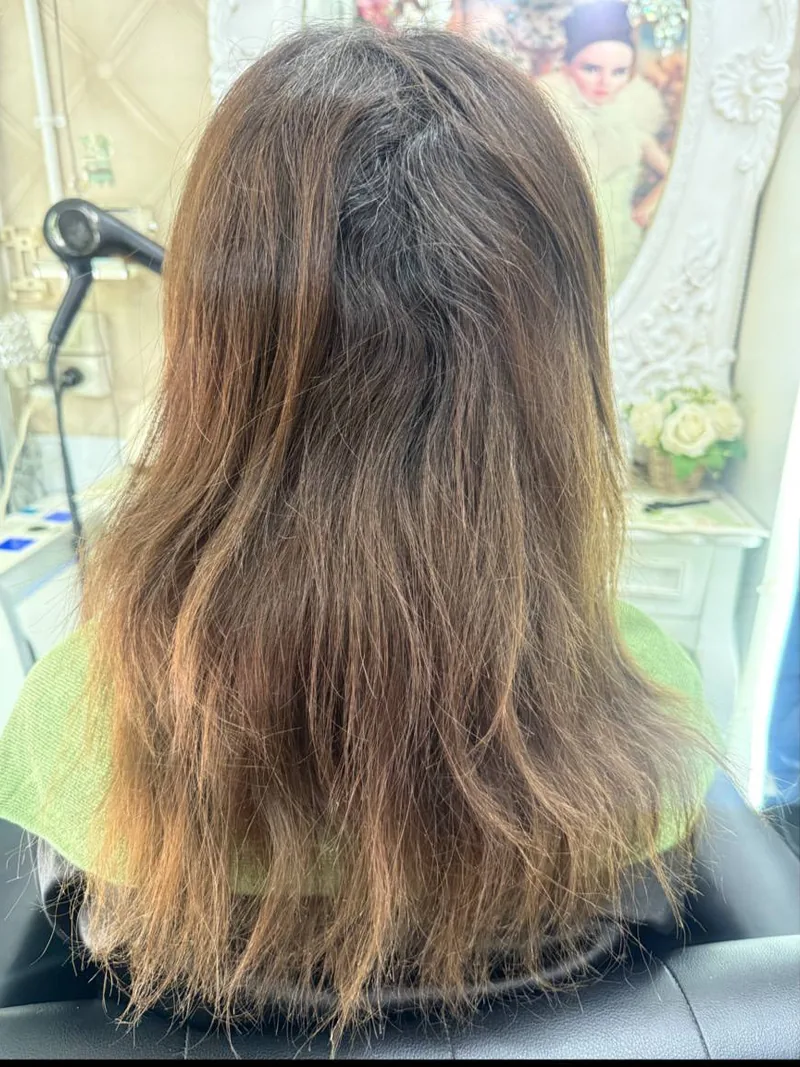
Faded coppery balayage on the lengths, heavy dark regrowth from grey coverage, dry damaged ends, with permanent straightening and repeated colouring in the history.
Full assessment of strength, dryness, elasticity and colour build-up; a gradual tone adjustment with treatment, Olaplex and nourishing products added through the service.
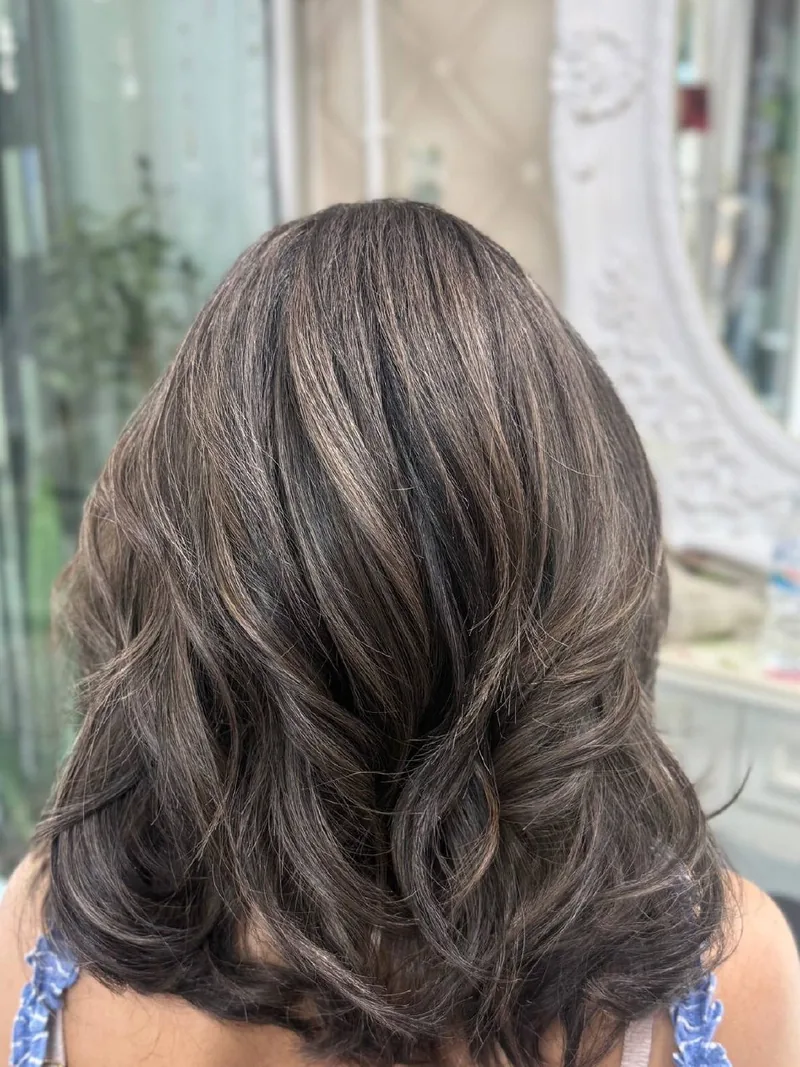
A glossy, dimensional ash brown that blends with the natural root tone from root to tip, softer and smoother, and a healthier base for future colour.
The Starting Point: Straightened, Bleached and Repeatedly Coloured
Hair that has been through permanent straightening and repeated colouring to cover grey needs a very careful look before anything is done to it. It is often dry, fragile, prone to breakage and uneven in its underlying tone.
Here the lengths carried a faded, coppery balayage from earlier lightening, the crown showed heavy dark regrowth from grey-coverage colour, and the ends were dry and frayed. The aim was a healthy, wearable colour that protects what was left of the hair’s strength.
Hair Assessment Comes First
Before starting, the hair was checked for strength, dryness, elasticity and previous colour build-up, which decides how much it can safely take in one visit. For hair bleached or chemically treated several times, lifting it lighter in one session carries a higher risk, especially when some sections are weaker than others. Forcing bleach without that assessment can leave the hair drier, more brittle and harder to repair later.
This is also why a result identical to a reference photo is not always possible in one visit. The outcome depends on the original base, the chemical history, the current strength and the level of damage, not only on the colour wanted. An honest colour correction assessment before any major change is the safer route.
The Approach: Gradual Colour That Protects the Hair
- Assessment. Strength, dryness, elasticity and colour build-up were checked section by section before any product went on.
- Gradual tone adjustment. Instead of pushing the previously bleached ends lighter, the tone was adjusted step by step towards a shade that works with the natural root colour.
- Treatment and Olaplex through the service. Treatment, Olaplex and other nourishing products were added at different steps to reduce dryness and roughness, so the hair felt softer and smoother after colouring.
- Finish. Dried and set in soft waves so the new dimension reads clearly from the back.
Why This Tone, Not the Lightest Possible
The chosen tone blends naturally with the real hair colour at the roots instead of forcing the bleached ends much lighter. The natural root area and the treated lengths have different conditions and underlying tones, so if the contrast between them is too strong the hair easily looks dry, damaged and unnatural.
A tone that sits close to the root colour makes the whole head look softer, healthier and fuller, and it is easier to maintain at home. It also leaves a better foundation for later colour: once the hair has recovered, it can gradually be taken lighter, for example towards a soft balayage, in a later session.
The Result, and Why Colour Correction Takes Longer
The result is a glossy, dimensional ash brown with fine lighter ribbons that blend into the natural root tone from root to tip. The ends look smoother and the colour reads as one soft, even shade in loose waves rather than a band of dark over faded copper.
Colour correction and damaged-hair repair usually take longer than a regular colour service, because the hair condition is checked again and again during the process; it cannot be rushed like healthy hair. For hair damaged by bleaching, repeated colouring or permanent straightening, recovery is a process rather than a one-day fix. Some cases need two to three sessions or more to adjust the colour gradually and rebuild strength, with bond-rebuilding treatments as part of that longer plan.
Before and After
Both photos are taken from the back. The goal was not the brightest possible blonde, but a healthy, wearable colour that protects what was left of the hair's strength.
 BeforeAfter
Home Care After the Service
Previously damaged hair dries out again more easily and may fade faster than healthy hair, so home care matters. Do not wash or wet the hair for the first two days after colouring. After that:
- Use a sulphate-free, colour-protecting shampoo and conditioner made for colour-treated hair.
- Add a weekly bond-repair or moisture mask at home, such as Olaplex No.3 or an equivalent.
- Keep heat moderate and always use a heat protectant before blow-drying or irons.
- Trim the very ends every 2 to 3 months so split ends do not travel further up the hair.
- Come in for a professional hair treatment between colour appointments.
For ongoing softness and shine, the Oilly Laurel Oil Hair Mask is a rinse-off treatment for mid-lengths to ends, 3 to 5 minutes as regular care or 5 to 10 for deeper conditioning.
Is This Repair-First Colour Plan Right for Your Hair?
A good match if:
- Your hair has been through permanent straightening, bleaching or repeated colouring and now feels dry, fragile or uneven in tone.
- You cover grey regularly and the regrowth forms a hard dark band against faded, lighter lengths.
- You want a healthier, wearable colour now and are open to going lighter gradually later.
- You prefer a tone close to your natural root colour that is easy to maintain at home.
Usually needs a different plan first:
- You want a bright blonde result in one visit: on hair this fragile, repair comes before any further lifting.
- Your hair was recently dyed black or with henna: the dark pigment has to be removed first, and the final tone usually cannot be reached in one session.
- You want full, opaque grey coverage every few weeks rather than a blended, dimensional result: a root touch-up service suits that goal better.
Not sure whether your hair can take the colour you want yet? Send a clear photo on LINE or WhatsApp and mention any straightening, bleach or grey-coverage colour in the last months; Oilly will tell you what is realistic before you book.
Frequently Asked Questions
Often it can be brought back to a healthier, wearable state, but recovery is a process, not a one-day fix. Strength, dryness, elasticity and colour build-up are assessed first, the colour is adjusted gradually with treatment and Olaplex, and some cases need two to three sessions or more.
Hair bleached or chemically treated several times is weaker, and some sections are usually weaker than others. Lifting it lighter in one session raises the risk of dryness, brittleness and breakage. A tone that blends with the natural root colour protects the hair and still looks fuller and healthier.
Longer than a regular colour service, because the hair condition is checked throughout. Simple tonal corrections may take around 2 to 3 hours; complex cases with layers of old colour or heavy damage can take 4 to 6 hours and are sometimes spread across several sessions.
At Oilly Hair Salon in Sathorn, repair from bleaching damage is ฿3,500 to 5,000, repair from straightening damage ฿3,000 to 4,000, and treatment for severely damaged hair with Olaplex ฿1,400 to 2,300. Colour correction itself is priced by the work needed: colour with one round of bleaching and treatment is ฿3,000 to 7,500, and a grey-coverage root touch-up with treatment is ฿700 to 1,600. The final quote is confirmed after the hair is checked in the salon.
Possibly, in a later session. A tone close to the natural root colour creates a better foundation, and once the hair has recovered it can be taken lighter gradually, for example towards a soft balayage. Whether and when that is safe depends on how the hair responds to the repair plan.
Do not wash or wet the hair for the first two days. Then use a sulphate-free colour-protecting shampoo and conditioner, a weekly bond-repair or moisture mask such as Olaplex No.3, moderate heat with a protectant, a trim every 2 to 3 months, and an in-salon treatment between colour appointments.
Ready to Repair Your Hair?
Oilly Hair Salon works by appointment in Sathorn, Bangkok, five minutes from BTS Chong Nonsi. Send a photo of your hair first on LINE or WhatsApp; your hair base, condition and chemical history are assessed in the salon before the colour and repair plan is decided.
Book an Appointment