Black Hair Color Removal in Bangkok: What to Know Before Color Correction
A guide for clients with black dye or dark color buildup who want to change hair color more safely at Oilly Hair Salon Bangkok.
Black hair color removal is not simply about making hair lighter. It is a color correction service that requires a careful assessment of color history, hair condition, and the target result before starting.
Quick Answer: Black hair color removal is the process of reducing black or very dark artificial pigment in the hair so the hair can be prepared for a new color. Not every case can safely move from black hair to a very light shade in one visit.
Before this type of service, the stylist should assess the hair in person. In many cases, a one-strand test helps show how much old pigment can lift and whether the hair can safely handle the next step.
Is black hair color removal different from color correction?
For clients, “black hair color removal” usually means correcting hair that has been dyed black or very dark so it can move toward a new color.
For a stylist, the important question is not the name of the service. It is how much dark pigment is inside the hair, how many times it was dyed, and whether the hair has also been bleached, straightened, permed, or chemically treated before.
Why is dyed black hair difficult to change?
Black and dark brown dyes can leave strong pigment buildup inside the hair, especially after repeated box dye or salon color applications.
If the hair is pushed lighter too quickly without assessment, the result may become uneven: bright roots, dark ends, orange or red bands, dryness, brittleness, or breakage.
Is black hair color removal different from color correction?
For clients, “black hair color removal” usually means correcting hair that has been dyed black or very dark so it can move toward a new color.
Why is dyed black hair difficult to change?
Black and dark brown dyes can leave strong pigment buildup inside the hair, especially after repeated box dye or salon color applications.
What should be checked before removing black dye?
Before color correction, the stylist should check how many times the hair was dyed dark, whether the dark color is only on the ends or throughout the head, previous bleach or chemical services, dryness, elasticity, and how light the target color is.
What should be checked before removing black dye?
Before color correction, the stylist should check how many times the hair was dyed dark, whether the dark color is only on the ends or throughout the head, previous bleach or chemical services, dryness, elasticity, and how light the target color is.
Why do we recommend a one-strand test?
A one-strand test helps show how the real hair reacts before applying chemicals to the whole head. It shows how much the black pigment can lift, what undertone appears, and whether the strand is still strong enough for the next step.
What colors can be done after black dye removal?
Depending on the lift result, many clients may move toward natural brown, ash brown, beige brown, honey brown, soft brown, or gentle balayage and highlights.
Very light ash, blonde, or fashion colors may require more than one visit and a careful plan based on hair strength.
Can black hair become light in one visit?
Sometimes the change is visible in the first visit, but black-dyed hair should not be expected to become very light immediately in every case.
If dark pigment is layered through the ends, a gradual plan may be safer and produce a more natural long-term result.
Will removing black dye damage the hair?
It is a chemical service, so there is always some risk of dryness or weakness, especially if the hair has been bleached, straightened, permed, or damaged before.
Risk can be reduced by assessment, choosing the right technique, avoiding an unrealistic lift, and adding treatment support when needed.
Who should rest the hair first?
Hair with gummy ends, severe bleach damage, recent straightening or perming, irritated scalp, or strands that break easily when wet may need recovery time before color correction.
How to prepare for consultation
Before consultation, prepare current hair photos in natural light, target color references, and your history of dyeing, bleaching, straightening, perming, or box dye use.
Consult Color Correction at Oilly Hair Salon Bangkok
If you have dyed black hair, dark color buildup, or uneven color and want to move toward a softer shade, Oilly Hair Salon Bangkok can assess your hair and plan a color correction approach based on your real condition.
FAQ
Can black box dye be removed?
Can black hair become blonde in one session?
Does black dye removal damage hair?
Why is a strand test important?
What should I book at Oilly?
Want to change black-dyed hair?
Consult Oilly before starting a major color change.
Book a Service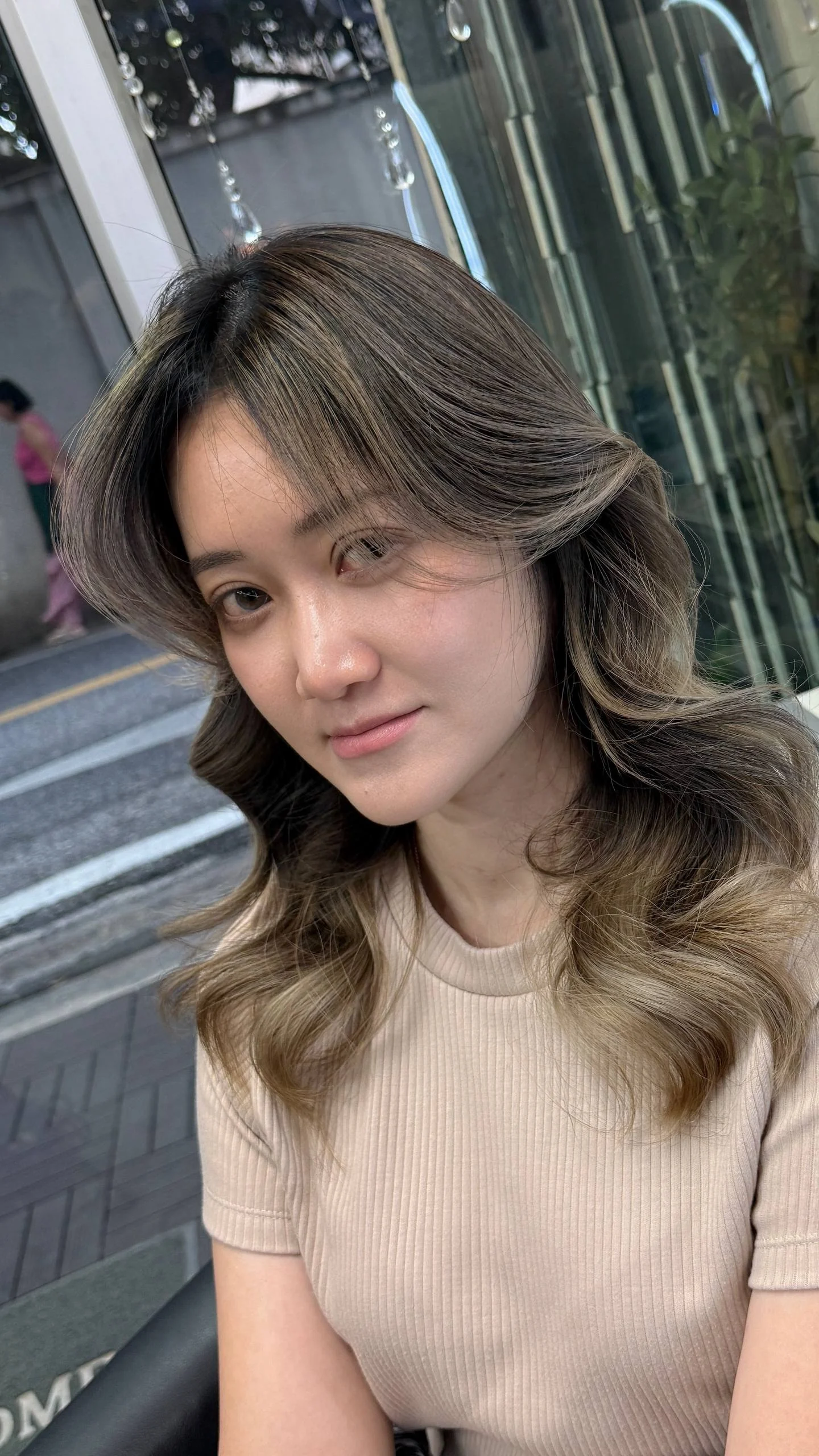
Grey Blending Balayage After Dark Dye
A high-difficulty case with dark home dye, previous digital perm history, controlled lightening and soft smoky beige grey blending.
View the case