Honey Brown Balayage for Asian Hair in Bangkok
A real Oilly case study on using soft honey brown balayage lines to brighten the face, add natural dimension, and keep the grow-out gentle for dark Asian hair.
For this client, the goal was not to make the hair look dramatically blonde. The design direction was softer and more refined: a Honey Brown Balayage that could bring light around the face, reduce the visual heaviness of long dark hair, and keep the result natural for everyday styling in Bangkok.
From dark visual weight to soft honey brown dimension
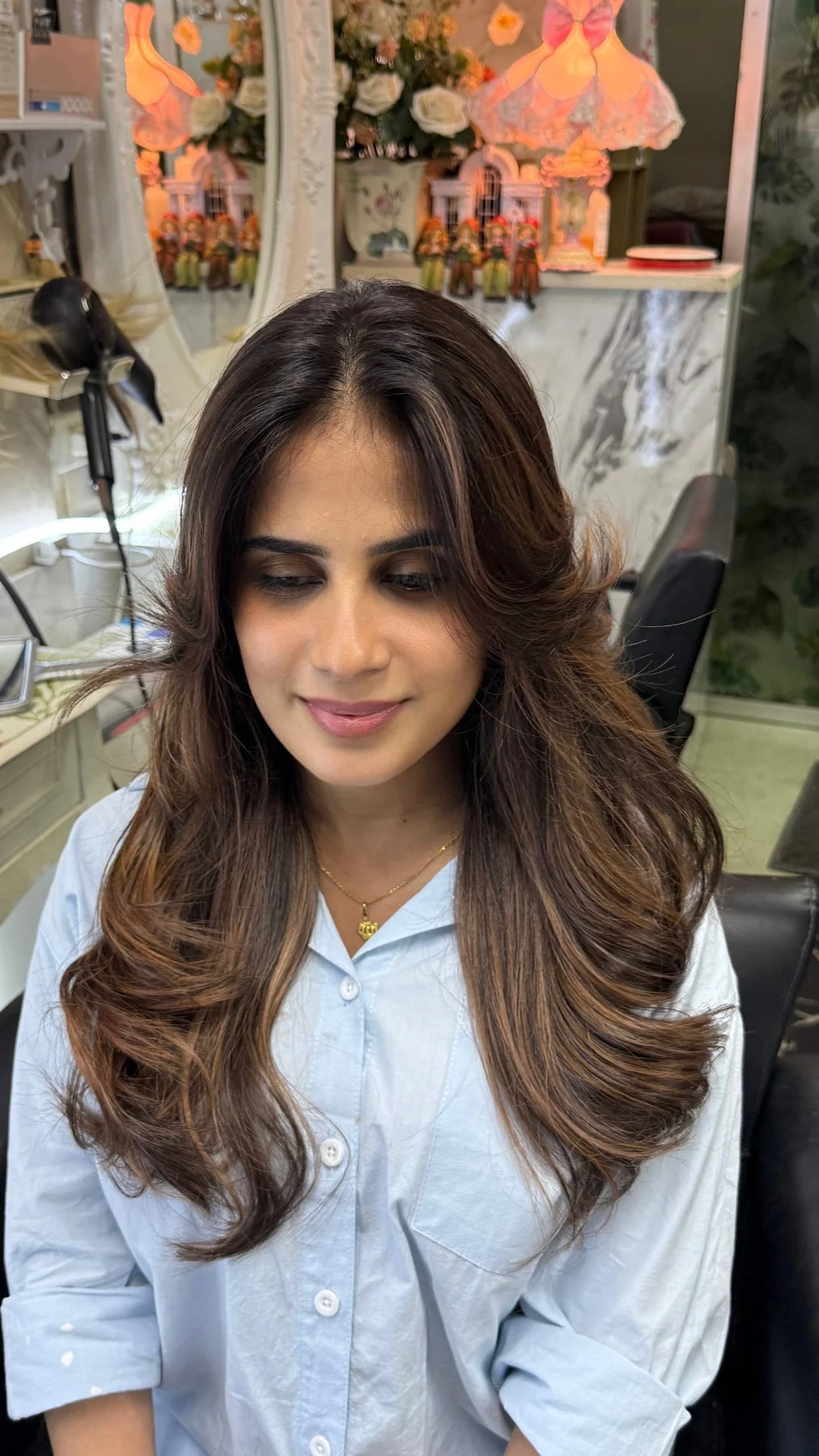
The transformation is strongest when the back view and face-framing result are read together: the back shows the balayage distribution, while the front shows how the softer brown lines brighten the face.
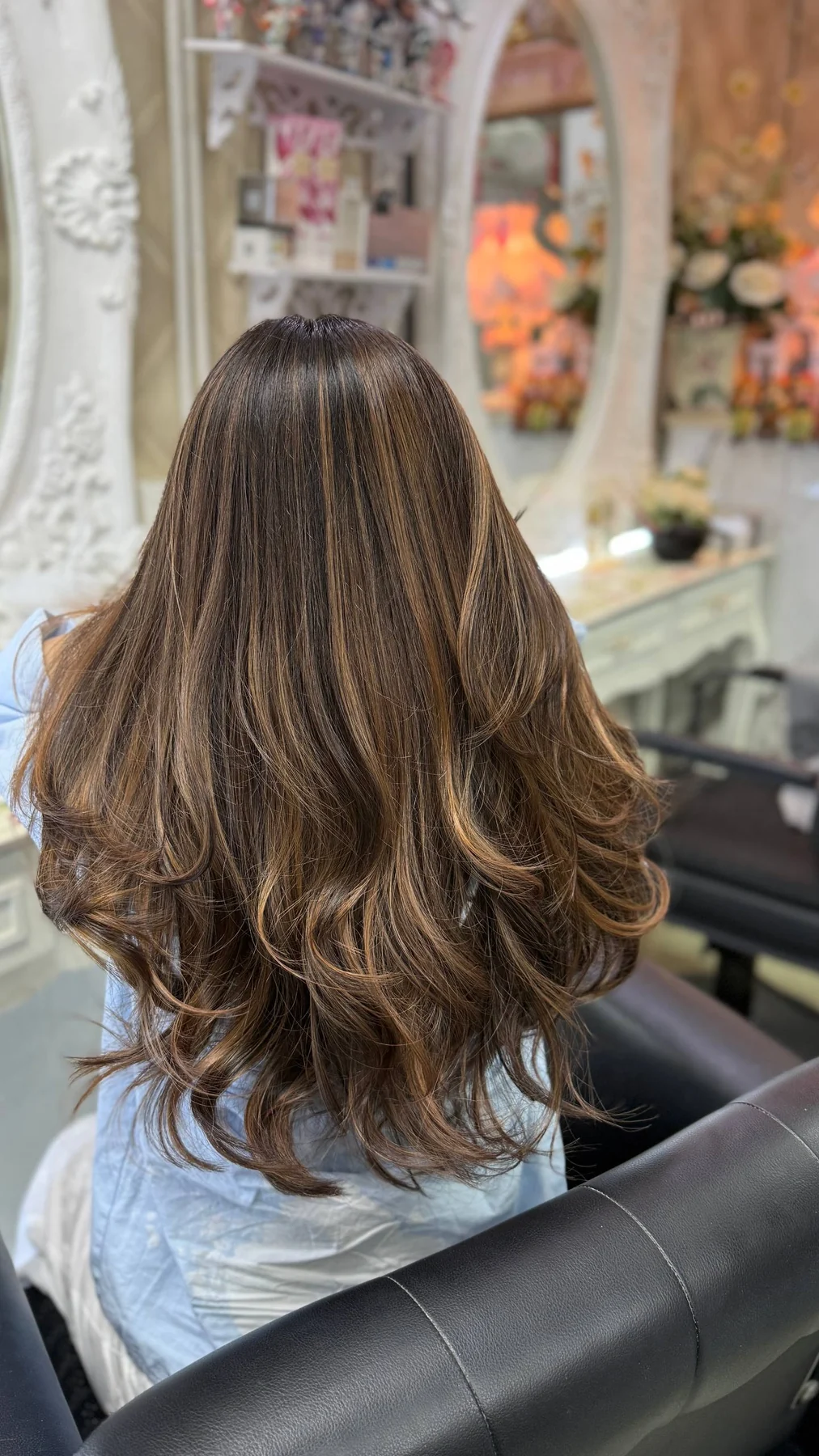
Soft brightness around the face, not a harsh blonde contrast
The front layers show why this colour direction works well for many dark-haired clients. The brightness is placed around the face and through the lower lengths, while the root area stays deeper and natural.
This keeps the result elegant, wearable, and easier to grow out than a full-head light colour.
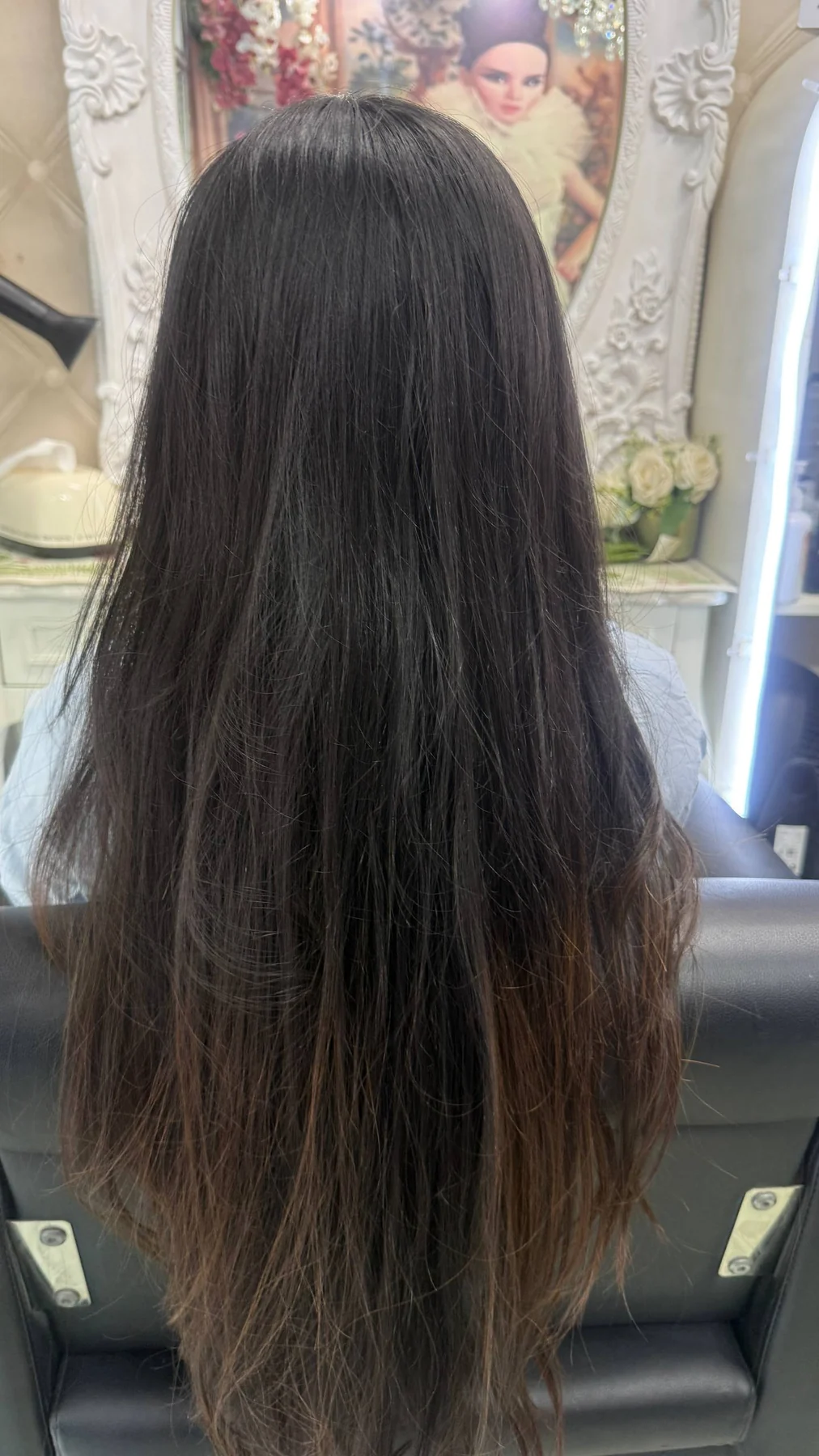
The starting point: long dark Asian hair with visual weight
Before the service, her long hair had a naturally dark base with softer brown tones through the ends. The overall impression was still beautiful, but visually heavier, with less light movement around the face. This is a common starting point for Asian hair clients who want a brighter look without changing into a high-contrast blonde result.
Why Honey Brown works for this kind of balayage
Honey Brown sits between warm brown, caramel, and soft bronde. On dark Asian hair, it can create brightness without looking too yellow, too orange, or too grey. The goal is to make the face look fresher and more dimensional while keeping the tone wearable and elegant.
Balayage line design is not one fixed pattern
Balayage is an art form. The line size, density, angle, and placement should change from client to client. Some designs use larger ribbons, some use smaller shimmer lines, and many use a mix. At Oilly, the placement is planned after checking the reference photo, face shape, hair condition, previous colour history, and how bright the client feels comfortable with.
A natural gradient for softer grow-out
The root area was kept deeper so the new hair growth can blend more naturally. The brightness gradually increases through the mid-lengths and ends, which helps the colour stay softer over time and avoids the hard regrowth line that can happen with full-head lightening.
How often does Honey Brown Balayage need maintenance?
For many clients, balayage can be refreshed around every 4–6 months. Some clients may wait longer depending on their preferred look, how much the colour fades, and how softly the root area grows out. The exact timing should always be decided by the hair condition and the client’s personal comfort with the result.
Service time and treatment support
A full balayage service like this can take around 6–8 hours. Hair length, previous colour history, and hair condition can change the timing. Treatment support such as Olaplex, Epres, or other premium care steps may be included to help the hair feel more manageable after a chemical colour service.
Who this colour direction is suitable for
Honey Brown Balayage can be a good direction for clients who want the face to look brighter, want soft dimensional lines, prefer a natural grow-out, or are exploring grey blending in a softer way. It can suit different ages, but the final tone and brightness should always be adjusted after consultation.
Aftercare for honey brown and bronde tones
Purple or blue shampoo may help control unwanted yellow or orange tones, usually around 1–2 times per week. If the shampoo is strong, it can be mixed with regular shampoo to reduce uneven pigment grabbing. Colour-safe shampoo, conditioner, intensive treatment, and avoiding very hot water can also help the colour fade more gently.
Honey Brown Balayage FAQ
Is Honey Brown Balayage suitable for Asian hair?
Yes, it can be suitable for many Asian hair clients because the tone adds warmth and brightness without needing an overly blonde result. The final shade should still be adjusted to the client’s base colour, skin tone, and hair condition.
How long does Honey Brown Balayage take?
A full service can take around 6–8 hours, depending on hair length, thickness, previous colour history, and whether treatment support is needed.
How often should balayage be refreshed?
Many clients refresh balayage around every 4–6 months. Some may wait longer if the root blend is soft and they like the lived-in result.
Does balayage need frequent root touch-ups?
In many cases, balayage needs less frequent root touch-ups than full-head colour because the root area is designed to blend more softly.
Can Honey Brown Balayage help with grey blending?
It can be used as part of a grey-blending direction for some clients, but the design depends on the amount of grey hair, base colour, and the client’s preferred level of brightness.
Considering Honey Brown Balayage?
At Oilly, the final tone and line placement are designed after checking your natural hair colour, previous colour history, face shape, and the level of brightness you feel comfortable with.
Book a Service