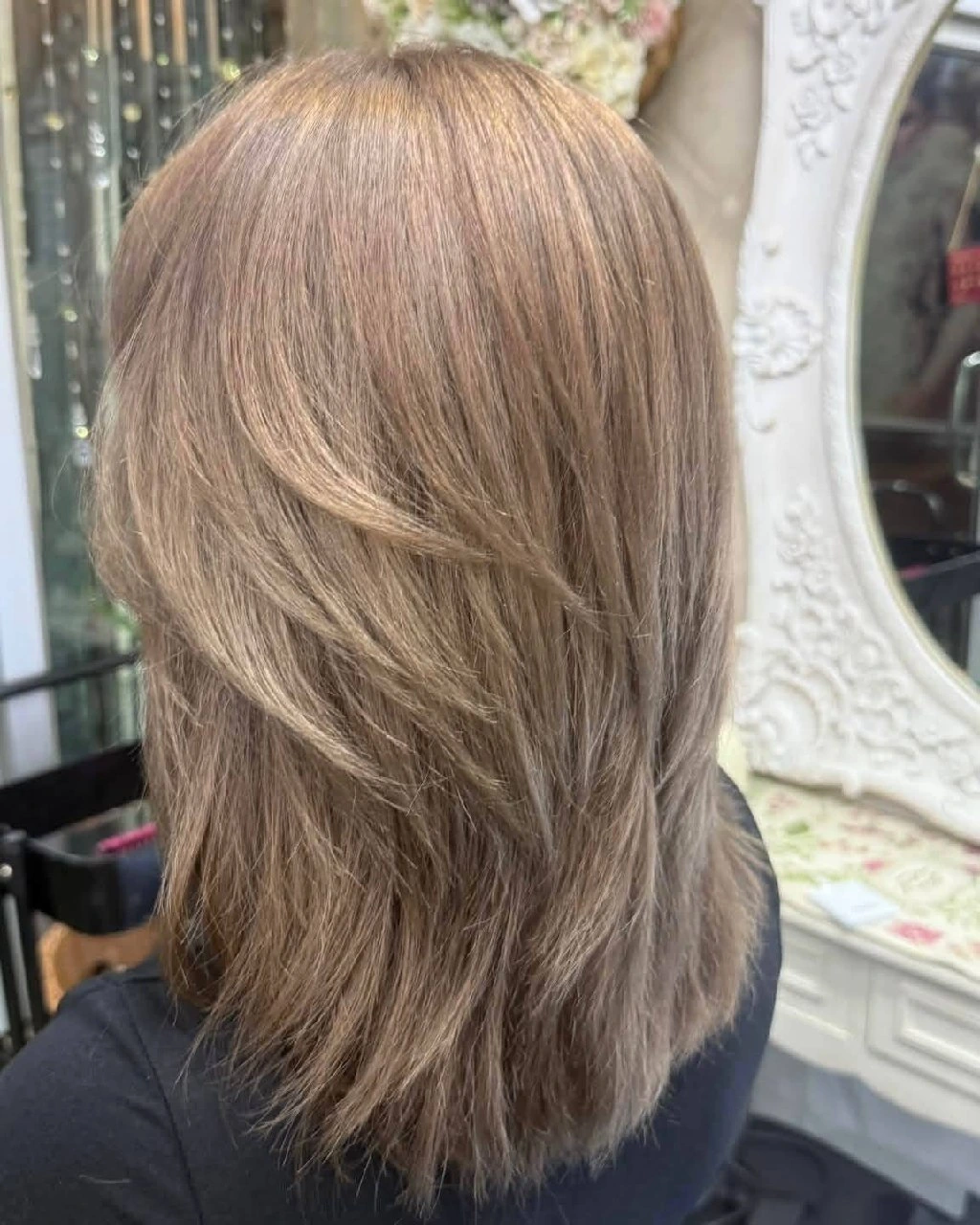
Selective Red Color Removal while Preserving Natural Roots in Bangkok
This client wanted to move away from previously coloured red hair while avoiding unnecessary lightening on her natural roots. Because the ends were already dry and carried existing damage, Oilly worked selectively: two controlled 3% lightening rounds through the red mid-lengths and ends, followed by a semi-permanent natural-looking tone chosen to blend closely with the untouched root colour.
Previously red-coloured lengths with dry, already-damaged ends
Reduce visible red while keeping the natural roots unlightened
Approximately five hours
Stylist: Oilly
From Uneven Red Lengths to a Softer Natural Blend
The finished result reduces the visible red, connects the coloured lengths more softly with the natural root and adds movement through a customised shoulder-length layered cut.
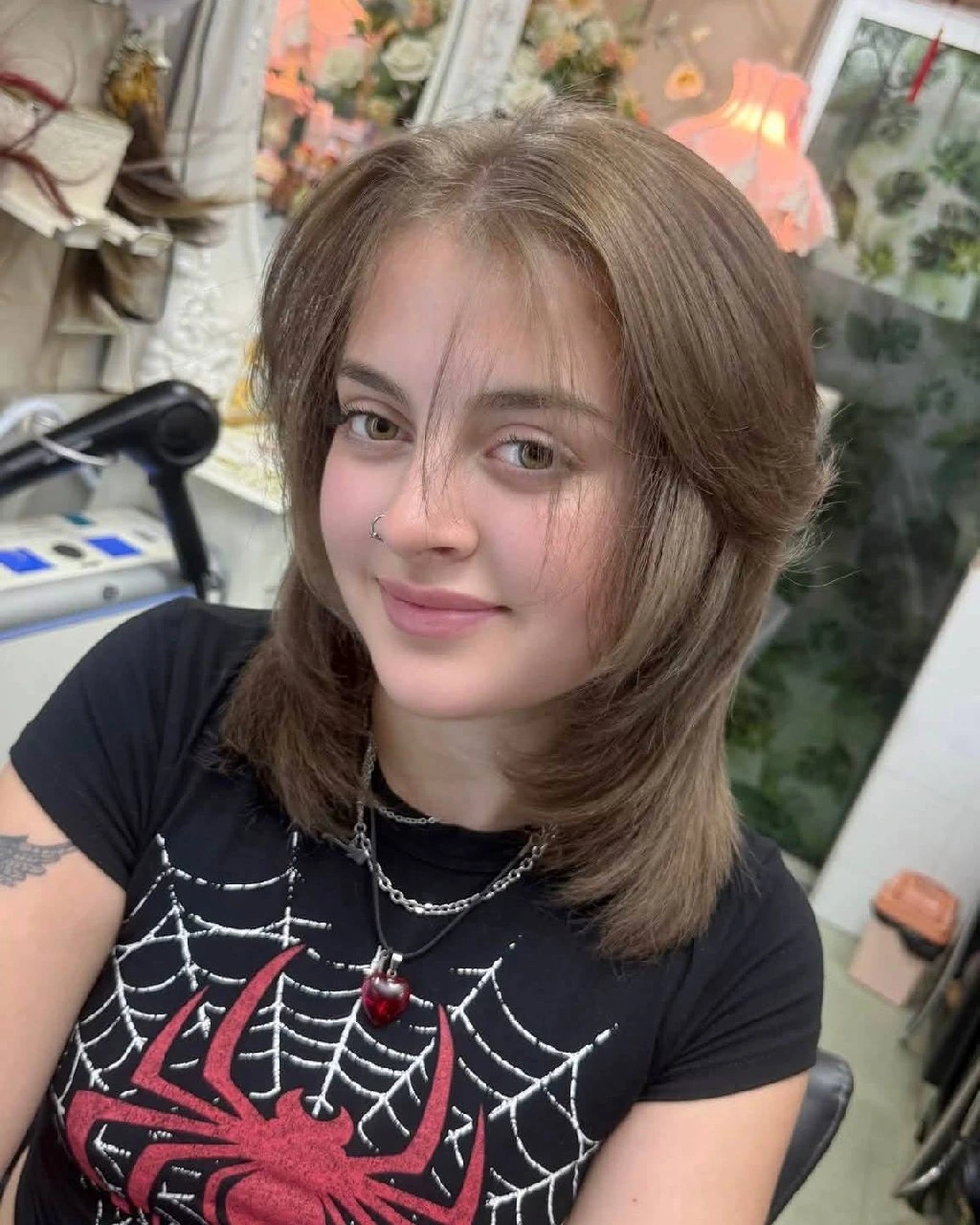 After · Front
 Before · Back
A Dry, Previously Coloured Starting Point
The client arrived with visible red pigment through the mid-lengths and ends. The ends were already dry and had existing damage from earlier services, so the goal could not be treated as a race toward the lightest possible result.
She wanted to reduce as much of the unwanted red as was realistically achievable and return closer to a colour that would sit naturally beside her own root. The plan therefore prioritised selective correction rather than lightening the entire head.
Why the Natural Roots Were Left Unlightened
The client's natural roots were deliberately preserved. Lightener was not applied to the untouched root area; the work focused only on sections where red artificial pigment remained, especially through the mid-lengths and ends.
Keeping the natural root intact avoids creating an unnecessary second correction problem at the scalp. It also allows future growth to connect more softly with the finished colour instead of producing a new harsh line between freshly lightened roots and natural regrowth.
Two Controlled 3% Lightening Rounds on the Red Sections
Oilly used a controlled lightening process with 3% strength in two carefully monitored rounds. Each round was limited to the areas carrying unwanted red pigment rather than being applied as a full-head bleach service.
This was the process selected for this client's starting point; it is not a universal formula for every red-removal case. Pigment buildup, previous colour history, current strength and the response of each section all affect how much red can be reduced safely in one appointment.
A Semi-Permanent Tone Chosen to Meet the Natural Root
After reducing the red pigment, Oilly selected a semi-permanent natural-looking tone intended to blend as closely as possible with the client's own root colour. The objective was a softer connection from the untouched root into the previously coloured lengths, not an excessively light or artificial finish.
Semi-permanent colour can soften and rebalance the visible tone, but the final appearance and fading pattern still depend on the remaining underlying pigment, porosity, washing routine and home care. An identical result cannot be promised for another starting base.
Approximately Five Hours with Treatment Support
The complete appointment took approximately five hours, including two controlled pigment-reduction rounds, treatment support during the process, the semi-permanent colour application and a customised haircut.
Treatment support can improve softness and manageability, but it does not make chemical colour correction damage-free or return previously damaged ends to a virgin condition. The service was planned around the hair that was present on the day and the realistic limits of that condition.
Slide-Cut Layers, Face Framing and Laurel Oil Hair Mask
Oilly completed the shape with slide-cut layers and face-framing details tailored to the client's features, personality and everyday style. The new shoulder-length outline removes some of the visually heavy, dry ends and allows the finished colour to move more naturally.
The service finished with Oilly Laurel Oil Hair Mask for immediate softness, smoothness, shine and a more flowing feel. These photographs show the professionally styled result immediately after the appointment; ongoing colour care remains important as the semi-permanent tone gradually fades.
Frequently Asked Questions
Not always. The achievable reduction depends on pigment buildup, previous colour history, current condition and how each section responds. This Case used two controlled rounds, but another client may need a different plan or more than one visit.
No. The untouched natural roots were deliberately left unlightened. The 3% lightening process was applied only to the mid-lengths and ends where red artificial pigment remained.
It was selected to soften the remaining tone and connect the previously coloured lengths more closely with the client's natural root colour. The visible shade and fading pattern vary with the underlying pigment and hair porosity.
The complete appointment took approximately five hours, including two controlled lightening rounds, treatment support, semi-permanent colour and the customised haircut.
No. Treatment support can improve softness and manageability, but any lightening changes the hair and cannot restore previously damaged ends to a virgin condition. The process must be adjusted to the hair's current strength.
Want to Move Away from Red without Lightening Your Natural Roots?
Send Oilly Hair Salon a clear photo of your current hair in natural light through LINE or WhatsApp before booking an actual colour service. Include your recent colour history so the team can explain the realistic correction direction for your current base and condition.
Explore Color Correction